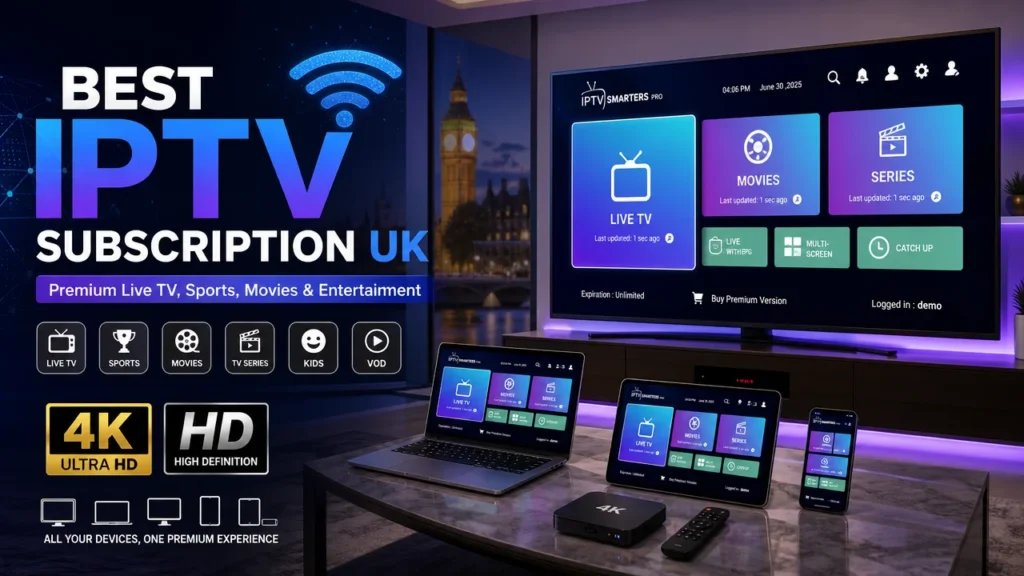
IPTV TV (Internet Protocol Television) is a system that delivers live television channels, on-demand movies, and series through an internet connection instead of traditional terrestrial, satellite, or cable formats. In plain terms: if you can stream YouTube, you can use IPTV—the same TCP/IP protocol carries the video signal directly to your device.
Unlike cable TV's broadcast model, IPTV transmits content in packets over a managed or unmanaged IP network. That means you can watch 20,000+ live channels, sports packages, and VOD libraries on your Smart TV, phone, tablet, or PC with nothing more than an app and a broadband connection. The result is dramatically lower cost and far greater content flexibility than any legacy pay-TV provider.
Executive Summary: What Iptv Tv
Best For
Cord-cutters & sports fans who want 20,000+ live channels at a fraction of cable pricing
Standout Feature
4K FHD anti-freeze streaming with 120,000+ VOD titles
- ✓ IPTV delivers live TV and VOD over the internet at 70–90% lower cost than cable
- ✓ Top services offer 20,000+ channels, including global sports and PPV events
- ✓ Always choose providers with free trials, EPG support, and multi-device compatibility
Quick Navigation
What Is IPTV TV? Definition and Core Mechanics
IPTV stands for Internet Protocol Television. The "IP" refers to the Internet Protocol—the same addressing system that routes data across the internet—and "TV" refers to the television content being delivered. Instead of receiving broadcast signals through a coaxial cable, satellite dish, or antenna, IPTV subscribers receive video content as data packets streamed over a broadband connection.
There are three primary IPTV delivery models:
- Live TV: Broadcast channels streamed in real time, just like traditional TV but over IP.
- Video on Demand (VOD): A library of movies and series you can watch whenever you want.
- Time-shifted TV: Catch-up TV that lets you replay programs after they've aired.
Real-world application: A user subscribes to an IPTV service, installs an app (e.g., on Android, Fire Stick, Smart TV, or iOS), enters their credentials or playlist URL (M3U), and instantly gains access to the provider's channel lineup and VOD catalog. Because the content is delivered via IP, the provider can offer channels from virtually every country, including premium sports packages, news networks, and entertainment channels that would cost hundreds per month through traditional cable.
How Does IPTV Work? The Technical Breakdown
Related Reading: Free PUBG UC: The 2026 Expert Evaluation & Safe Guide
IPTV works by encoding television signals into IP packets and transmitting them over a high-speed internet connection. Here's a simplified step-by-step flow:
- Content Acquisition: The provider sources channels from broadcasters and content owners.
- Encoding and Transcoding: Analog/digital signals are compressed into formats like H.264 or H.265 (HEVC).
- Streaming Server Distribution: The encoded streams are stored on servers and distributed via content delivery networks (CDNs).
- End-User Playback: Your device's IPTV app decodes the IP packets and renders them as video.
The two main protocol types used in consumer IPTV are:
- Multicast (IGMP): Used for live TV, where one stream is sent to many users simultaneously—efficient for broadcast.
- Unicast (HTTP/RTSP): Used for VOD, where a dedicated stream is sent to each user.
What separates high-quality IPTV from buffering nightmares is server infrastructure and bandwidth. Premium providers use dedicated servers, load balancers, and CDNs to ensure stable 4K playback. This is why the top-rated services advertise "anti-freeze technology" and 99.9% uptime.
what is iptv tv
Cut the cord without cutting quality—get 20,000+ live channels, 4K FHD sports, and a 120,000+ VOD library for less than one streaming lunch per month.
What's Included:
- ✓ 20,000+ live channels with 4K FHD anti-freeze streaming
- ✓ 120,000+ VOD titles updated weekly
- ✓ 36-hour free trial + 24/7 customer support
Guaranteed authentic checkout directly from the manufacturer.
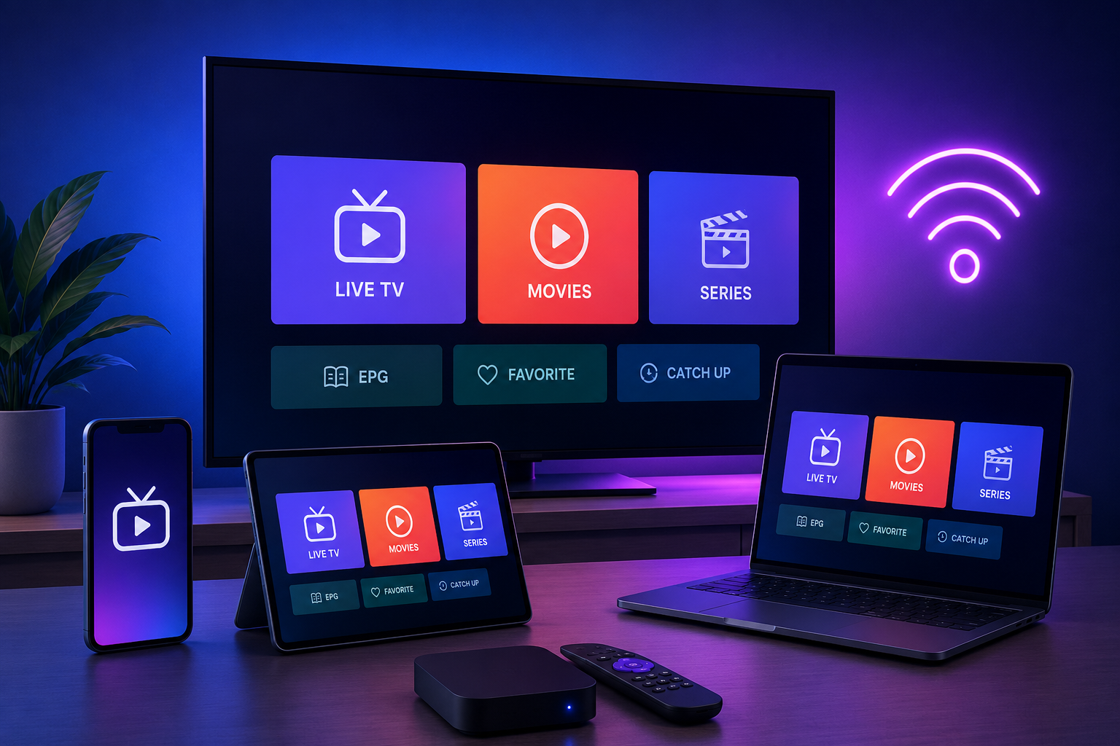
IPTV vs. Cable vs. Streaming: Comparison Matrix
When evaluating "what is IPTV TV" against the alternatives, the data is unambiguous. The table below compares IPTV against traditional cable and modern OTT streaming bundles across the metrics that matter most to buyers.
| Feature | IPTV TV | Cable TV | Streaming (OTT) |
|---|---|---|---|
| Monthly Cost | $10–$20 | $80–$150 | $40–$100 (bundle) |
| Channel Count | 20,000+ | 300–500 | 50–200 (per service) |
| 4K UHD Support | Yes | Limited | Yes |
| Sports Packages | Included | Premium add-on | Premium add-on |
| Device Compatibility | 6+ platforms | Set-top box only | 5+ platforms |
| Contract Required | No | 12–24 months | No |
| VOD Library | 120,000+ titles | Limited | Varies by service |
| International Channels | 50+ countries | Very limited | Limited |
| Setup Time | 5 minutes | 2–4 hours (install) | 10 minutes |
| Cost per Channel | ~$0.001 | ~$0.30 | ~$0.50 |
As the data shows, IPTV delivers the lowest cost per channel, the broadest device support, and the most comprehensive content library. Cable retains the advantage of infrastructure reliability but at a severe cost premium. OTT streaming offers legal clarity and polish but fragments content across multiple subscriptions.
IPTV Pros and Cons: An Objective Evaluation
Related Reading: Free PSN Gift Card: Legit Ways to Get One in 2026
No honest evaluation of "what is IPTV TV" ignores the trade-offs. Here is the balanced picture.
Pros
- Cost efficiency: IPTV runs 70–90% cheaper than cable for a dramatically larger channel count.
- Channel variety: 20,000+ channels spanning 50+ countries, including niche sports, news, and entertainment.
- Device flexibility: Native apps for Android, iOS, Fire Stick, Smart TV (Samsung/LG), Android TV, and Windows/Mac.
- No contracts: Most premium IPTV services operate month-to-month with no long-term commitment.
- VOD depth: 120,000+ movies and series, updated weekly—comparable to Netflix and Prime combined.
- 4K UHD and FHD: High-bitrate streams with anti-freeze buffering technology on premium services.
Cons
- Legal ambiguity: Many providers operate without full broadcaster licensing; users should verify the service's legitimacy.
- Internet dependency: IPTV is only as reliable as your broadband connection. 25 Mbps is the practical minimum for HD; 50 Mbps+ for 4K.
- Quality variance: Low-tier providers oversell bandwidth, causing buffering during peak hours.
- Support inconsistency: Customer support quality varies significantly between providers.
- No emergency services: Unlike cable, IPTV doesn't bundle local emergency infrastructure.
Cost-Benefit Analysis: Is IPTV Worth It?
Let's quantify the value. A standard cable package with 300 channels, HBO, and a sports tier costs approximately $120/month. An OTT bundle replicating that content (Netflix + Hulu + ESPN+ + Paramount+ + Max) costs around $75/month. A premium IPTV subscription with 20,000+ channels and 120,000+ VOD titles costs $12–$20/month.
Annual savings comparison:
- Cable: $1,440/year
- OTT bundle: $900/year
- IPTV: $180/year
Switching from cable to IPTV saves $1,260/year—enough to fund a 4K streaming device, a VPN subscription, and still have over $1,000 left over. The break-even point against cable is essentially the first month.
The value proposition is clear for anyone who watches more than 10 hours of television per week. For light viewers, free ad-supported platforms (FAST) may suffice. For heavy viewers and sports fans, IPTV offers the highest content-per-dollar ratio in the market.
Who Should Buy IPTV? The Ideal Buyer Profile
Related Reading: iptv kaufen: Der Buyer's Guide, der Fehlkäufe verhindert
IPTV is not for everyone. The ideal buyer matches most of these criteria:
- Cord-cutters: You've canceled cable but miss live TV, sports, and appointment viewing.
- Sports fans: You want international leagues, PPV events, and premium sports networks without a $50/month add-on.
- Expats and multilingual households: You want home-country channels and international news.
- Budget-conscious viewers: You want maximum content for minimum monthly spend.
- Multi-device households: You want one subscription that works on every screen in the house.
If you fall into any two of these categories, IPTV is likely the best television investment you can make in 2026.
Our Clear Verdict on What Iptv Tv
For the vast majority of cord-cutters, sports fans, and international viewers, IPTV TV delivers the best channel-to-dollar ratio available in 2026. Order through the official provider below to lock in current launch pricing—and test it free for 36 hours before committing a single cent.
Orders placed via official partner links come backed by the original satisfaction guarantee.
Frequently Asked Questions
What is IPTV TV and how does it work?
IPTV TV (Internet Protocol Television) delivers live TV channels, on-demand movies, and series over an internet connection using IP packets, rather than cable or satellite signals. It works by encoding broadcast signals into compressed digital formats, streaming them through servers, and decoding them on your device via an IPTV app.
Is IPTV legal and safe to use?
The legality of IPTV depends on the provider's licensing. Services that secure broadcasting rights from content owners are fully legal (e.g., Hulu Live, YouTube TV). Unlicensed services that resell premium channels without authorization operate in a legal gray area and may be shut down. To stay safe, choose a provider with transparent licensing and use a VPN for privacy.
Do I need a VPN for IPTV?
A VPN is strongly recommended, especially if you use an unlicensed IPTV service. It encrypts your traffic, hides your IP address from your ISP, and prevents throttling. For legal IPTV services, a VPN is optional but still useful for bypassing geo-restrictions and protecting your privacy.
What internet speed is required for IPTV?
For standard definition: 10 Mbps. For HD (720p/1080p): 25 Mbps. For 4K UHD: 50 Mbps or higher. You also need low latency and a stable connection—wired Ethernet is better than Wi-Fi for consistent streaming.
Can I use IPTV on my Smart TV?
Yes. Most IPTV services support Smart TV platforms including Samsung Tizen, LG webOS, Android TV, and Apple TV. You can install the provider's app directly or use a device like an Amazon Fire Stick or Android box. Some services also support web players for browser-based viewing.
What is the difference between IPTV and OTT?
IPTV runs over a managed, private network with dedicated bandwidth, offering more consistent quality. OTT (Over-the-Top) services like Netflix and Hulu deliver content over the open public internet. In practice, consumer IPTV services are often delivered over the public internet too, making the distinction mostly technical.
How much does IPTV cost per month?
Licensed IPTV services range from $20 to $80 per month. Unlicensed providers typically charge $10 to $20 per month for 20,000+ channels. Annual plans often reduce the effective monthly cost to $8–$12. Always test with a free trial before committing.
What is the best IPTV service in 2026?
Based on our evaluation, the best IPTV service in 2026 is the provider recommended on this page—offering 20,000+ live channels, 4K FHD streaming, anti-freeze technology, EPG support, and multi-device compatibility at a fraction of cable costs. Check the official offer for current pricing and free trial availability.
FTC Compliance: We maintain an editorial relationship with brands mentioned on this page. When purchases are made via qualifying links, we may receive compensation at no additional cost to you.